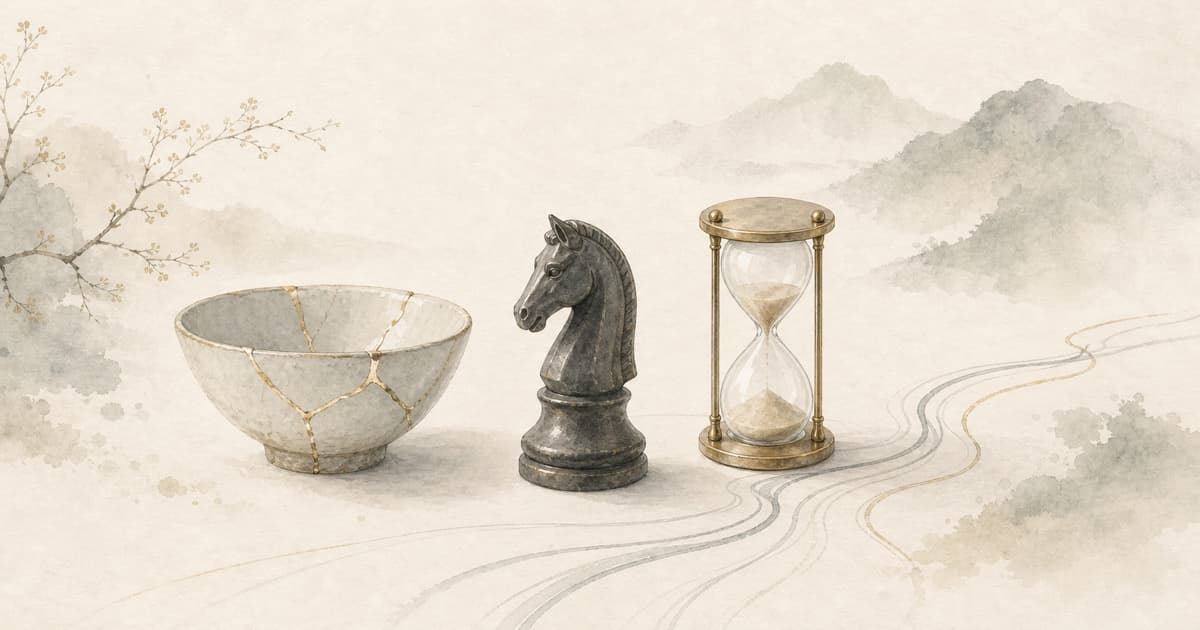
Startups Don’t Need More Smart People
Startups are no longer short on smart people.
Intelligence still matters, of course. It is simply no longer the rare advantage it used to be. In the past, someone who could learn faster, remember more, and analyze better could create real distance between themselves and everyone else. Now artificial intelligence can find the information, draft the plan, write the code, and produce a decent analysis in minutes. Many things we once treated as signs of exceptional intelligence are quickly becoming infrastructure that anyone can access.
That has not made startups easier. If anything, it has made the differences between people much more obvious.
A normal day at a startup might look like this: in the morning, you discover that the feature you spent two months building is something nobody wants. At noon, an important customer changes their mind. By the afternoon, a problem inside the team needs your immediate attention. You have not even processed the first disappointment before the next one arrives. The company will not pause for three days so you can recover.
That is why the first thing I look for in someone is not intelligence. It is whether they can withstand failure.
Withstanding failure does not mean pretending not to care. It does not mean repeating some comforting line about failure being the mother of success. It means that after reality proves you wrong, and after the emotions settle, you can keep working. The plan was wrong, so you change it. The project failed, so you study what happened. You lost a customer today, so tomorrow you find the next one.
At a startup, failure is not one dramatic event. Large and small failures arrive together, then keep coming back. If someone needs a long time to rebuild their belief in themselves after every setback, the process may consume them before the company has a chance to produce results.
But being comfortable with failure is not enough.
Some people seem to have an exceptionally healthy attitude. A project dies and they are fine. They miss a target and immediately move on. Failure cannot crush them, but they rarely win either. The second trait a startup needs is an intense desire to succeed.
That may sound contradictory. It is not. You have to accept that failure will happen, but you cannot accept learning nothing from it. You can lose, but you cannot feel nothing about losing.
A good chess player cares deeply about every game they lose. One loss does not make them question whether they should ever play again. But they do not shrug and pretend the result meant nothing. They go back through the game. Where did the position start to turn? What did they fail to see? If the same situation appears again, can they make a better choice?
Building a company works the same way. Failure has to sting enough to provoke reflection, change, and the determination to do better next time. The strongest people are not destroyed by failure, but they do not let themselves off too easily either. They recover quickly and reflect deeply.
The third trait is the ability to move several important things forward at once.
This does not mean answering messages during a meeting and doing five things badly. It means knowing how to keep several critical lines of work moving. A startup cannot wait for you to finish one responsibility perfectly before beginning the next. The product needs work. Customers need attention. People need to be hired. Money needs to be raised. Team problems do not wait patiently in line.
You have to know what needs your direct attention now, what can be handed off at seventy percent, and what can be left alone for a while without falling apart.
Because the brutal truth about startups is that time is life.
Compared with an established company, you have no brand, no distribution, no money, and no army of talented people. Your only possible advantage is that you can see a problem sooner, decide faster, test the next idea, and begin again before they do. Time is not one resource among many. It is almost the only resource a startup can truly use to compete.
So when I hire for a startup, these are the three things I care about most: Can this person absorb repeated failure? Do they still want to win badly enough to study every loss? Can they keep several important things moving in the middle of chaos?
There are plenty of smart people, and artificial intelligence will keep getting smarter. But people who can get back up repeatedly, care deeply about every loss, and keep moving important work forward with limited time are still rare.
Whether a startup survives often depends on finding them.
New ideas, straight to your inbox.
AI, engineering, and experiments. One or two useful emails a month.
No spam. Unsubscribe anytime.