Meta's 1:50 Manager Bet: A Prediction for What Breaks Next
TL;DR: Meta's 1:50 manager model will not remove management. It will push management work onto tech leads, staff engineers, and senior ICs. It can work in senior-heavy AI teams, but it will break first in junior-heavy teams, unclear product teams, and cross-functional work. Over time, some form of management will come back under a different name.
One manager. Fifty people. That is not just a new management model. It is a trade-off.
Meta is not only cutting jobs or moving people into AI roles. It is changing what kind of company it wants to be. The company wants fewer layers, fewer managers, more hands-on work, and more AI tools helping people move faster. In simple terms, Meta wants to become lighter.
There is a real reason for this. Meta is spending heavily on AI: chips, data centers, infrastructure, engineers, and new AI products. That kind of spending forces the company to ask hard questions. Where are we slow? Where are we expensive? Where do we have too many people between strategy and execution?
Managers are one answer.
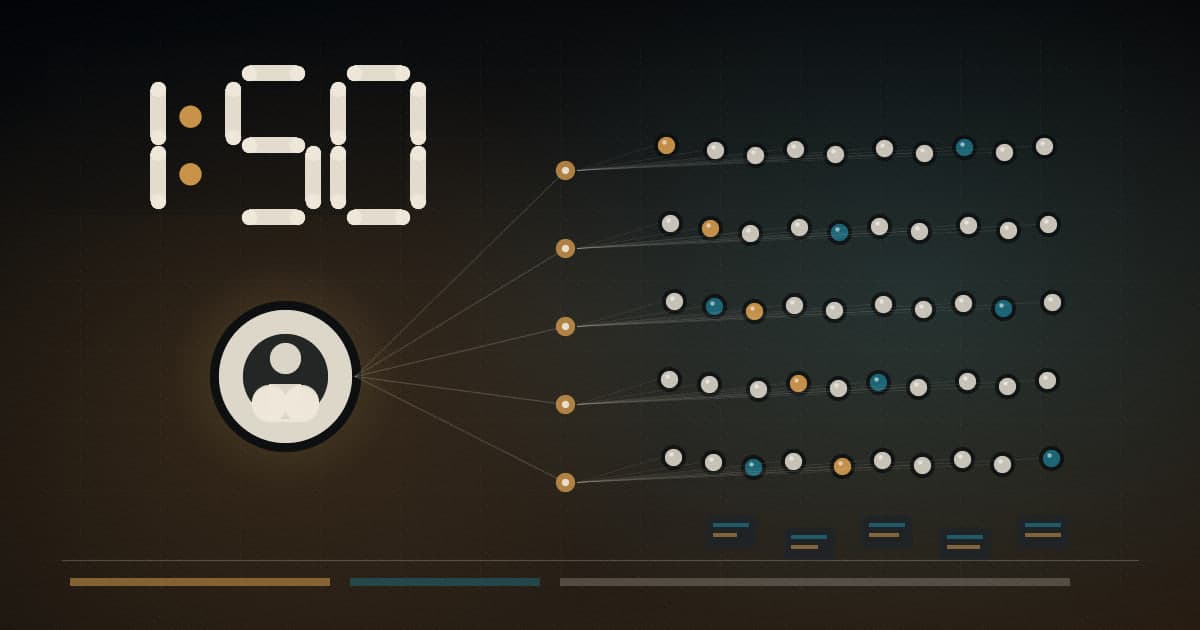
In the old model, a manager might manage 8 to 12 people. They set priorities, coach employees, unblock projects, explain strategy, and handle performance reviews. In the new model, one manager may manage 30 to 50 people. That is not just a bigger team. It is a different job.
At that size, a manager can still run meetings, look at metrics, handle escalations, and do performance reviews. But they cannot really know everyone well. They cannot give each person much time. They cannot easily see who is quietly burning out, who is being underestimated, who needs coaching, or who is doing important work that does not show up clearly in a dashboard.
The calendar alone starts to prove the point. If 50 people each get a 30-minute 1:1 every other week, that is 25 hours of meetings every two weeks before any prep, follow-up, hiring, planning, performance reviews, or actual work. Add one reorg memo, two production incidents, and a surprise "quick sync" that is never quick, and the manager is no longer managing. They are running a small airport.
The funny version is this: by Wednesday afternoon, the manager knows three people well. The star who ships everything, the person whose project is on fire, and the employee who just wrote "can we talk?" with no context. Everyone else becomes a dashboard row with good intentions. This is how people disappear inside a big team. Not because the manager is bad, but because attention does not scale like cloud storage.
Want more practical breakdowns?
AI, engineering, and experiments. One or two useful emails a month.
No spam. Unsubscribe anytime.
That is the core trade-off. Meta gets speed, but employees lose support. Meta gets fewer layers, but employees get less protection from pressure. Meta lowers management cost, but senior engineers quietly pick up more management work.
This does not mean the plan is foolish. In some teams, it can work. If a team is full of strong, senior people and the goal is clear, they do not need much traditional management. An AI infrastructure team with experienced engineers can move faster with fewer managers. They know what to do. They need less hand-holding and fewer check-ins.
But this model will be much harder for other teams. Junior employees need coaching. Product teams need debate. Cross-functional teams need coordination. Messy projects need judgment calls. AI tools can help with notes, code, documents, and status updates. But they cannot fully replace a good manager who understands people, context, and timing.
What will happen instead is that management work will move to other people. Tech leads, staff engineers, and senior ICs will start doing more of it. They will help plan work, mentor people, make decisions, and solve conflicts. They may not have the manager title, but they will still do manager work.
That is the part companies often miss. You can remove managers faster than you can remove the need for management. The org chart may look flatter, but the work does not disappear. It just becomes less visible.
So Meta's bet is clear. It believes AI tools plus strong ICs can replace part of the old management structure. It believes the company can move faster if it becomes leaner and less layered. It is also accepting that some people will get less help, less coaching, and less attention.
For Meta, the upside is speed, focus, and lower cost. For employees, the downside is more pressure, less support, and more invisible work. This works best in senior-heavy technical teams with clear goals. It breaks first in teams with juniors, unclear product direction, or lots of cross-team work.
Over time, Meta may bring back some form of management. It may not call those people managers. It may call them leads, owners, or something else. But the need will come back, because large companies always need people who coordinate, coach, and make judgment calls.
Meta is not saying managers are useless. It is saying it wants fewer of them. It is willing to accept weaker people management if that helps the company move faster on AI.
One manager can track 50 people.
One manager cannot truly manage 50 people.
That difference is where Meta's bet will either work or break.
Sources
New ideas, straight to your inbox.
AI, engineering, and experiments. One or two useful emails a month.
No spam. Unsubscribe anytime.